Putting a website in Portuguese, English and Spanish looks, at first, like a translation job. Just run the texts through someone who speaks all three languages and you are done. In practice, anyone who does it this way quickly discovers that translating words is not the same as communicating in each market. Language is only the most visible layer.
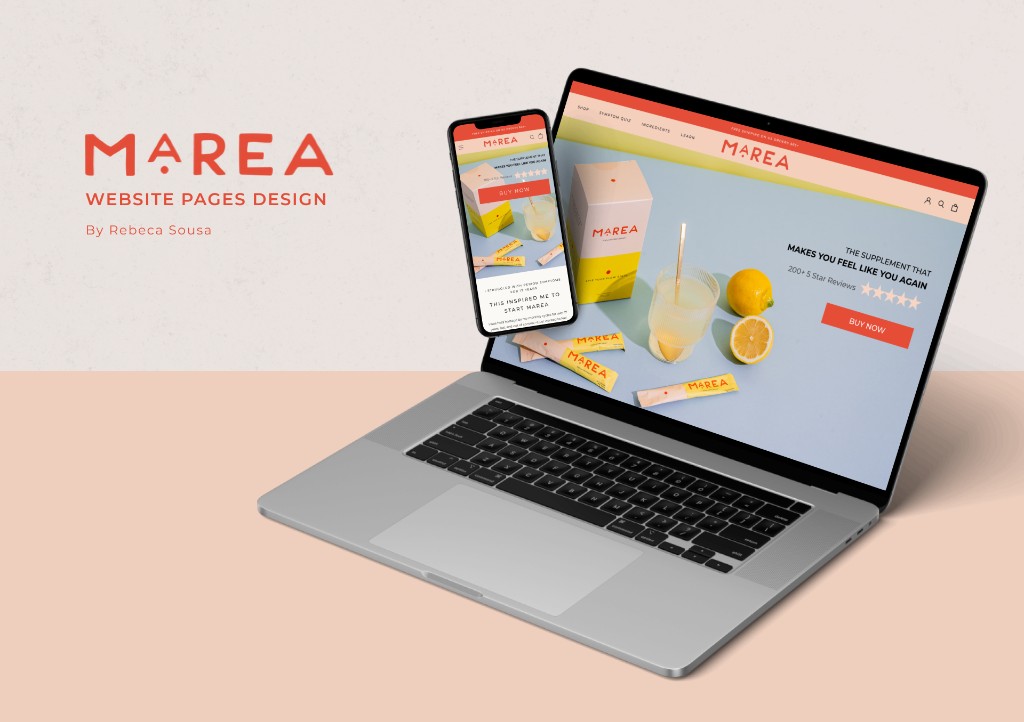
We run this very site in three languages and design multilingual experiences for clients with audiences in Brazil, the United States and Latin America, like Marea Wellness. What we learned is that a truly trilingual site changes far more than the text.
Translation is not localization
Translating swaps words from one language for another. Localizing adapts the message so it sounds natural and convincing for someone living in that context. The difference shows up in details that decide conversion:
Tone of voice: what feels warm in Portuguese can feel excessive in English, and the other way around.
Expressions and references: promises, slang and examples need to make local sense.
Formats: date, currency, units and even how you address the reader change by region.
Social proof: testimonials and logos that impress in one market may be unknown in another.
What changes beyond the text
A well-made multilingual site adjusts layers a translator alone cannot reach:
Call to action: the CTA that works in one language is rarely the literal translation of the other. It has to be rewritten for the local buying habit.
Hierarchy and length: the same paragraph grows or shrinks between languages. The layout has to breathe without breaking in any of them.
Proof and offers: highlight clients, numbers and guarantees relevant to each audience, not the same ones for everybody.
Journey: sometimes the international market enters through another page and expects a different sequence to contact.
Multilingual SEO: being found in each language
Translating well is useless if Google does not understand which version to show to whom. A trilingual site requires technical structure to be indexed correctly:
Dedicated URLs per language, with a clear and stable structure.
Hreflang tags connecting the versions, so the search engine serves the right one in each country.
Localized metadata, titles and descriptions, not auto-translated.
Keyword research per language: people search with different terms.
Keyword research is one of the most ignored points. The term that drives traffic in Portuguese may have no volume at all when translated literally into English. Localizing SEO means discovering how each market actually searches.
How we structure from briefing to launch
We treat content as structured data from the start: each text lives in a per-language dictionary, which keeps the three versions in sync and avoids the mess of loose files. That way, updating one sentence never leaves the other languages behind, and the site grows without losing consistency.
If your company speaks to more than one market, a well-built trilingual site is a competitive advantage, as long as it is designed as communication, not translation. Belin handles design, technical structure and localization, from briefing to launch. Let's plan your site.