Many companies believe branding ends when a vector logo file is delivered. At Belin Design, we treat brand not as a static image, but as a dynamic system. An isolated logo is only a symbol; a branding system is what ensures your company is recognized, respected, and scalable across every touchpoint.
The difference between "having a logo" and "having a brand" is consistency. When visual communication, tone of voice, and user experience (UX) do not align, perceived value drops. To professionalize communication, you need to build an ecosystem.
Branding as a living system
A brand system works like your company's "operating system." It defines how you show up in email marketing, how your site behaves on different devices, and even the visual weight of the gifts your clients receive.
When design is treated only as aesthetics, it becomes a cost. When treated as a system, it becomes an asset. Standardization removes the need to "reinvent the wheel" with every new marketing piece, speeds up timelines, and ensures media investment is not wasted on an amateur presentation.
To see how this works in practice, we look at two recent studio projects where the focus was building this complete ecosystem.
Stratto case: from naming to digital presence

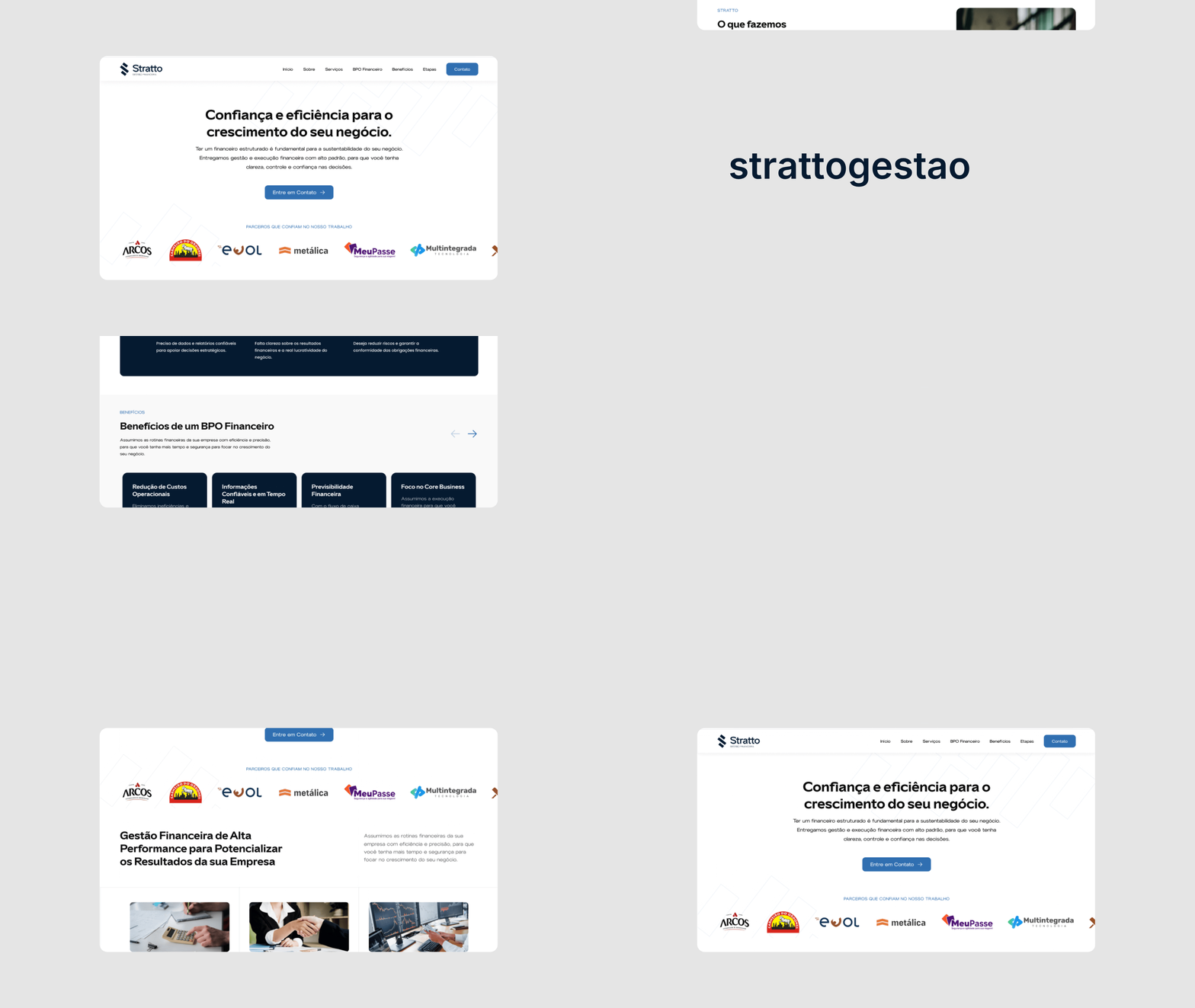
Stratto Gestão Financeira is a clear example of how branding starts long before the first stroke in Illustrator. As a financial consultancy, the brand needed to convey precision, authority, and modernity, moving away from the generic, conservative look of traditional banking.
Naming and positioning
The work began with naming. The name must be short, memorable, and available for registration. For Stratto, we sought a sound that evoked structure and strategy. Defining the name is the system's first step, it sets the rhythm for verbal identity and the website domain.
Building the ecosystem
After consolidating the strategic foundation, we executed the system across multiple fronts:
Visual Identity: A mark that works in small social icons and complex reports alike.
Social Media: Templates that let Stratto's team post educational content while keeping visual hierarchy.
Website: An institutional site focused on conversion, with motion that reinforces the consultancy's sophistication.
The result was not just "a logo for a finance company," but a sales-ready tool where clients feel the same confidence reading a LinkedIn post or browsing the official site.
Íntegra case: consistency through rebranding

While Stratto was built from scratch, Íntegra Estratégias was a rebranding exercise. The company already had a solid track record in management consulting, but its visual identity did not match the technical level of its consultants.
The challenge was evolving the brand without losing its essence, expanding it to all physical and digital touchpoints.
From stationery to branded gifts
In systemic branding, tactile experience matters as much as digital. For Íntegra, the project included:
Corporate stationery: Business cards, folders, and letterheads with papers and finishes aligned to premium positioning.
Branded gifts: The mark applied to everyday objects, keeping the consultancy present in clients' routines.
Website: A portal that organizes the consultancy's different areas of practice intuitively.
Storymaking and event presence
We recently supported Íntegra at CONSAD 2026, Brazil's largest consulting congress. There, the brand system was put to the test. Our photography and storymaking work captured the event's energy through the lens of brand identity.
In the same group, Íntegra Utilities needed a different approach: a brand update, not a full rebrand. iu logo, styleguide, and institutional site in one month, visual evolution without rebuilding positioning from scratch.
It was not just "taking photos," but ensuring the editorial rhythm of images and videos matched the tone of voice established in the rebranding. That is systemic branding: the brand shows up the same way in a PDF report and in an Instagram behind-the-scenes Reel.

The pillars of a complete brand ecosystem
For your company to stop "having a symbol" and start having a system, pay attention to these five pillars:
1. Strategy and Naming: Why the brand exists and what it is called. Without this, visual design is empty.
2. Scalable Visual Identity: Colors, type, and graphic elements that work at any scale and medium (from favicon to billboard).
3. UI/UX Design: Interface design and user experience. Digital branding is felt through ease of navigation and site performance.
4. Tone of Voice and Content: How the brand speaks. Word choice on the site and social channels should be standardized.
5. Art Direction and Photography: The style of images used. Strong brands have a recognizable "filter" even without the logo.
Tangible benefits for the business
Investing in a branding system is not aesthetic luxury; it is a pragmatic decision with measurable results:
Operational efficiency: Marketing and sales teams move faster with clear manuals and templates.
Higher margins: Brands that convey professionalism and authority can charge more than generic competitors.
Immediate trust: In B2B or high-value sectors (health, finance), disorganized visual communication breeds distrust.
Cross-channel consistency: Clients receive the same message via email marketing, LinkedIn, or in-person meetings.

The next step for your communication
If your company still relies on a logo from years ago that no longer reflects your service quality, or if every new communication piece feels like it came from a different company, you do not have an "art" problem. You have a system problem.
At Belin Design, we structure projects with fixed scope and organized checkpoints so you know exactly what you will receive and when. We work from initial diagnosis through high-performance websites and social media management.
Explore our projects or start a conversation so we can assess where your brand stands today.